



Knowledge management for operational SOPs
Last updated:
In today's fast-paced business landscape, effective Knowledge Management (KM) is essential for organizations to remain competitive, innovative, and efficient. By capturing, storing, and disseminating valuable insights, KM ensures that critical information is readily available to the right people at the right time. Simultaneously, Standard Operating Procedures (SOPs) serve as the backbone for consistent performance, compliance, and quality control.
Why Knowledge Management Matters
- Knowledge Retention: Prevent loss of expertise when employees leave or change roles.
- Faster Onboarding: Help new hires learn best practices quickly.
- Collaboration & Innovation: Encourage teamwork and innovation.
How SOPs Enhance Operational Consistency
- Improved Efficiency: Standardize workflows and reduce wasted time.
- Quality Assurance: Maintain standards and ensure satisfaction.
- Risk Management: Mitigate risks and ensure compliance.
The Synergy Between KM and SOPs
While SOPs outline "how to do things right," Knowledge Management explains "why it's done that way."
- Capture Tribal Knowledge: Add experiential insights to SOPs.
- Enable Continuous Improvement: Gather ongoing feedback for updates.
- Enhance Training & Development: Provide resources for growth.
Implementing an Integrated KM-SOP System

To fully realize the benefits, organizations should:
- Centralize Documentation: One place for all SOPs and knowledge.
- Engage Stakeholders: Include all employees in the improvement process.
- Monitor & Refine: Keep SOPs relevant and up to date.
Combining Knowledge Management and Standard Operating Procedures leads to consistent results and sustainable growth.
Start your free 30-day trialKnowledge Management in the Work Instruction App
Go to the Manage section on the main screen. You need Management rights.

Press the User Management button to create new users:
Click "User group management" to manage groups:
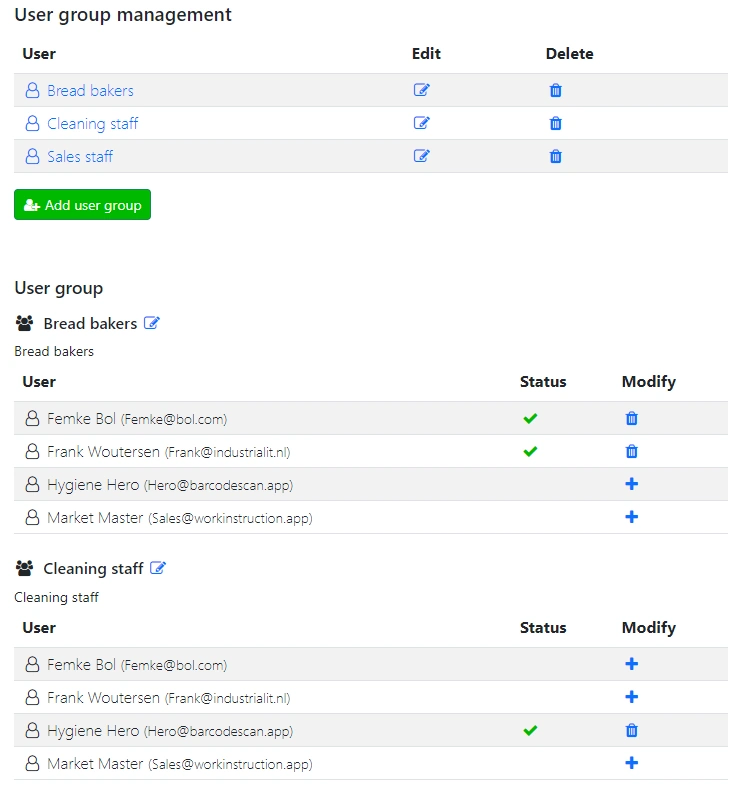
Create new groups and add users to them:
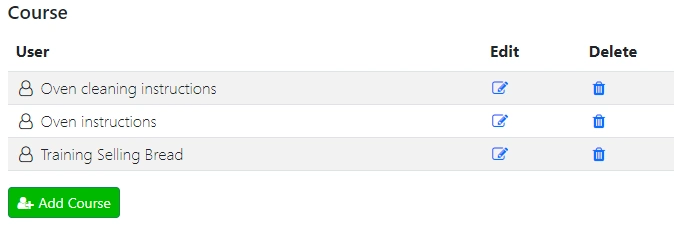
Click "Course" to link courses to work instructions:

Link courses to user groups:

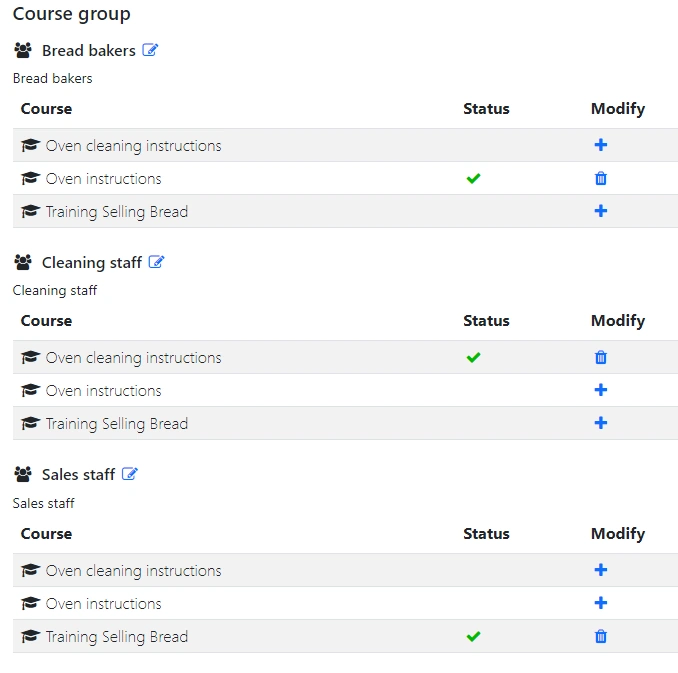
Under "My Education", users follow courses to prove competence:

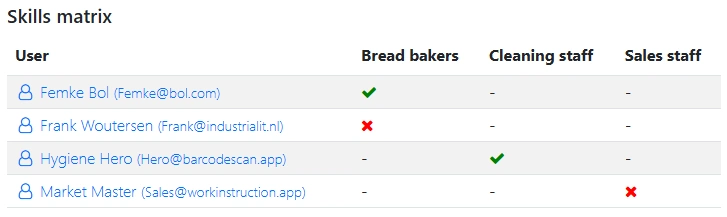
Click on the "Skills matrix" to verify certification:

Skills Matrix
What is knowledge management on the shop floor?
Knowledge management is the practice of capturing what experienced people know and making it available to everyone who needs it, at the moment they need it. In production and logistics most knowledge is tacit: the settings that work, the check that prevents a defect, the sound a bearing makes before it fails. When those people retire or change jobs, the knowledge leaves with them.
The Work Instruction App captures that knowledge as executable work instructions with photos and videos, published where the work happens. Remarks from operators flow back to the owner of the instruction, so knowledge is not only stored but kept current.
How knowledge management works in the app
- Capture: film or photograph the expert while performing the task and turn it into steps (see work instructions).
- Publish: one current version per task, opened via QR code or NFC tag at the workstation (see version control).
- Use: operators execute the instruction step by step; the app shows the right photo, value and check at the right moment.
- Improve: remarks from the shop floor go to the owner, who publishes the improved version; the skills matrix shows who has mastered which task.
Use case: retiring maintenance technician
The most experienced technician of a packaging company announced his retirement in eight months. Instead of writing a manual, he recorded 40 short instructions with his phone: settings per product, recurring faults and their fixes, the weekly checks. Each instruction was reviewed by a younger colleague who executed it and asked questions.
On his last day the knowledge was in the app, linked to the machines by QR code, and the younger colleagues had executed every instruction at least once.
Frequently asked questions about knowledge management
A wiki stores documents that people have to search for and read. A work instruction is executed step by step at the workstation, with the right photo and check at the right moment, and every execution is logged. Knowledge is used instead of stored.
Every instruction has an owner and operators can leave remarks while executing. The owner reviews remarks and publishes a new version; older versions stay in the history.
Yes. Steps can contain photos and videos, so the demonstration by the expert is part of the instruction, not a separate file.