In short: shop-floor knowledge is lost because it lives in the heads and hands of experienced people, not on paper. To keep it, find the knowledge that would hurt most to lose (risk of loss times impact), capture it with photos and short videos while the expert does the work, turn the recordings into step-by-step work instructions, test them with the next generation and keep them current with versions. Start long before the farewell party.
Why is shop-floor knowledge lost when people leave?
Every plant has a few people everybody calls when something odd happens. They know the press needs an extra minute after a cold start, which sound means a bearing is going, how to set the machine for the one customer with a tighter tolerance and which supplier batch always needs a second look. None of that is in the manual. It was learned by doing, over years, and passed on by standing next to someone.
That kind of know-how is called tacit knowledge, or tribal knowledge. It is lost for predictable reasons:
- Nobody writes it down because nobody has to. As long as the expert is on shift, asking is faster than documenting.
- Experts do not know what they know. After twenty years a check becomes a reflex. Ask an expert to describe the job and the small, important details are the first to be left out.
- The handover is too late. Retirement dates are often known years in advance, yet the transfer starts in the last weeks, when there is no time to test anything.
- Existing documents are out of date. The binder at the machine describes the process of three modifications ago, so people stop trusting it and ask a colleague instead.
The result shows up after the person has left: longer changeovers, more scrap on the difficult products, the same fault solved again from scratch, and new operators who take much longer to become independent.
Which knowledge should you capture first?
You cannot capture everything, and you do not need to. Most of what experienced people do is already covered by standard training. The goal is to find the few tasks where the knowledge is both concentrated in one or two people and expensive to get wrong. Two questions do most of the work:
- Risk of loss: how many people can do this task well, and when will they leave or retire? One person who leaves next year is a high risk; four people spread over shifts is a low one.
- Impact: what happens if nobody can do it? Think of safety, quality complaints, downtime and the time it would take to rediscover the method.
Score both on a simple scale from 1 to 3 and multiply them. A short interview with each expert and their team leader is enough to fill in the table: ask which jobs they are called for, which jobs they would not trust a new colleague with, and what they wish they had been told when they started.
| Task (example) | Risk of loss (1-3) | Impact (1-3) | Score | Priority |
|---|---|---|---|---|
| Setting up the press for the tight-tolerance product | 3 (one person, retires next year) | 3 (scrap, customer complaint) | 9 | Capture now |
| Clearing a jam in the packing line | 2 (two people on day shift) | 3 (line stops) | 6 | Capture this quarter |
| Monthly lubrication round | 3 (one technician) | 2 (wear, later breakdown) | 6 | Capture this quarter |
| Daily cleaning of the workstation | 1 (everyone does it) | 1 (easy to redo) | 1 | Standard instruction is enough |
The scores are not science. Their value is that they force a conversation about specific tasks and dates instead of a vague worry that "we will lose a lot of knowledge".
How do you capture expert knowledge, step by step?
1. Plan the capture sessions with the expert
Plan short capture sessions in the expert's normal working time, at the moments the task is really done. Explain why: not to replace them, but to make sure their way of working survives. Experts who feel their craft is valued usually share far more than experts who feel they are being emptied out before they leave.
2. Record the work while it happens
Record the task with photos and short videos while the expert does it, not in a meeting room afterwards. Film from the operator's point of view, one action per clip, and ask "what are you looking at now?" and "how do you know it is right?" as you go. Those answers are the tacit knowledge you are after. Keep the clips short: a ten-second clip of the correct hand position is more useful than a forty-minute recording nobody will watch.
3. Ask for the exceptions and the warning signs
Write down the exceptions and warning signs separately, because they are what the expert knows and the standard procedure does not. What do you do when the material is cold, when the reading drifts, when the colleague on the previous shift left it in a different state? What do you hear, see or feel just before it goes wrong? These details usually become the checks and notes in the instruction.
4. Turn the recordings into a work instruction
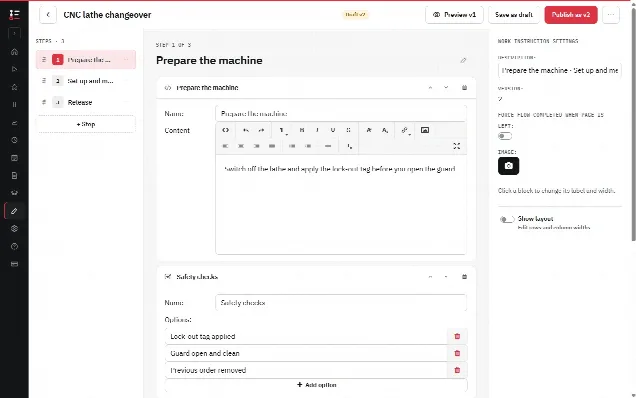
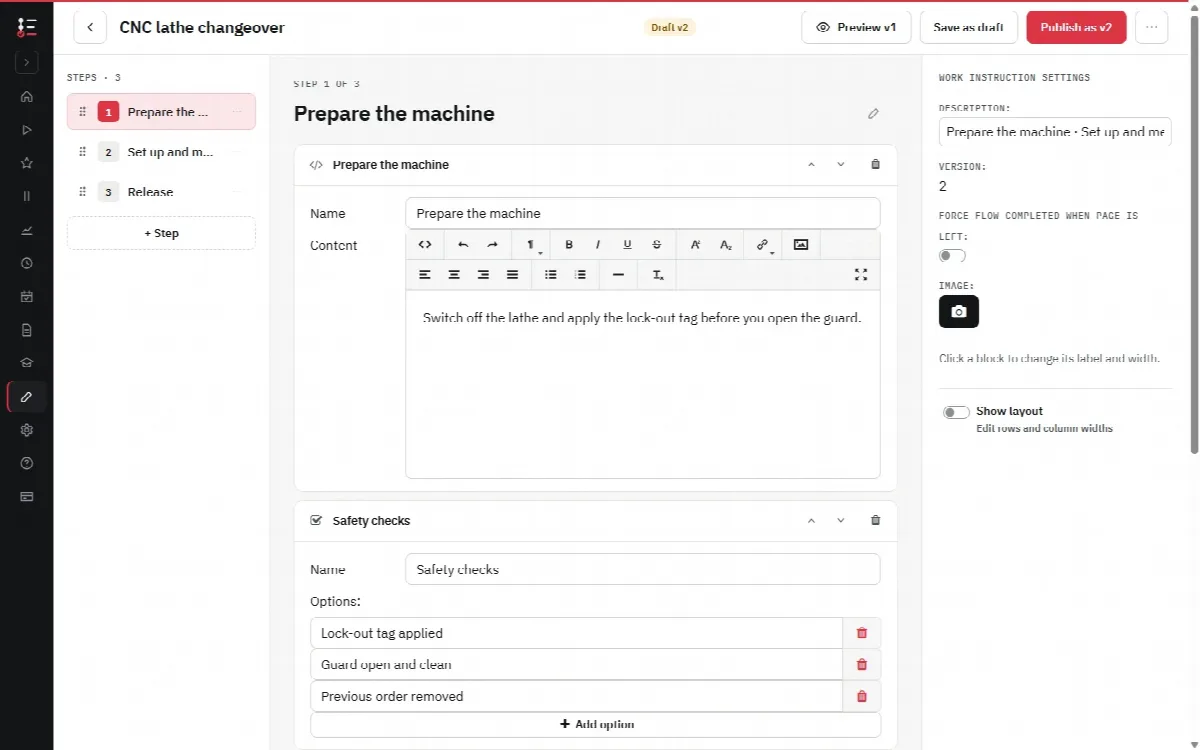
Turn the recordings into a work instruction with one action per step, a photo or clip of the correct result and a short sentence that says what to do and what to check. Put the critical values in the step itself, not in a separate document. Where the expert made a judgement call, add a check the operator must confirm or a value they must enter. Our guide on how to write a work instruction covers the format in detail.
5. Test it with the next generation
Test the draft with someone who has never done the task, while the expert watches without helping. Every question the new person asks is a gap in the instruction. Fix it and test again, preferably with a second person. This is the step that is most often skipped and the one that tells you whether the knowledge has actually been transferred, rather than just filmed.
6. Publish and keep it current with versions
Publish the instruction as a version and update it whenever the process, the machine or the material changes. Knowledge that was captured once and never maintained becomes the next out-of-date binder. Make one person the owner of each instruction, and use the questions operators ask at the machine as the trigger for the next version. Read more about version control for work instructions.
What does good captured knowledge look like?
A good test is whether a competent operator who has never done the task can do it correctly with the instruction alone. In practice that means:
- Short steps, each with one action and the visible result.
- Photos and clips of the real machine, taken from where the operator stands.
- The warning signs and exceptions written next to the step they belong to.
- Values the operator must check or record, with the allowed range in the label.
- A version number and a date, so everyone knows they are looking at the current method.
Combine the instructions with training: link them to a course and record who has completed it, so you can see in a skills matrix how many people can now do the critical tasks. The goal is that the "risk of loss" score in your table goes down because more people are qualified, not just because a document exists.
How does ISO 9001 look at organisational knowledge?
ISO 9001:2015 has a clause on this subject: 7.1.6, organisational knowledge. It asks you to determine the knowledge needed to operate your processes, to maintain it and make it available to the extent necessary, and to consider how to acquire or access additional knowledge when needs change. The notes to the clause name knowledge gained from experience as one of the sources. Capturing expert knowledge in versioned work instructions, linked to training records, is a practical way to meet that requirement and to show an auditor how it works.
Knowledge retention in practice with digital work instructions
In the Work Instruction App the capture and the instruction are the same thing. You can create a photo work instruction by taking photos in sequence at the machine (each photo becomes a page with a caption and description), or a video work instruction from short clips. You then refine it in the browser editor: add explanation text, a checkbox for each critical check, a number field for values, and mark the steps that must be filled in as Required.
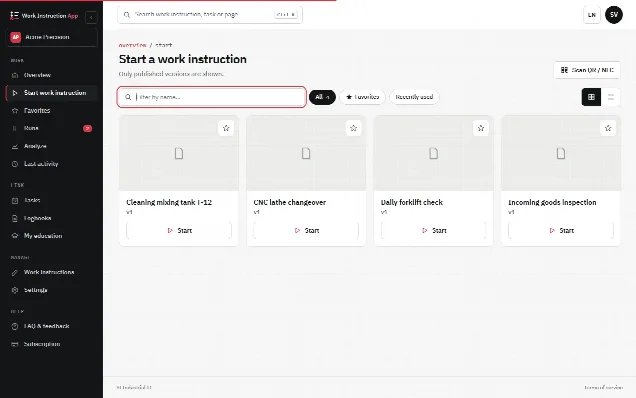
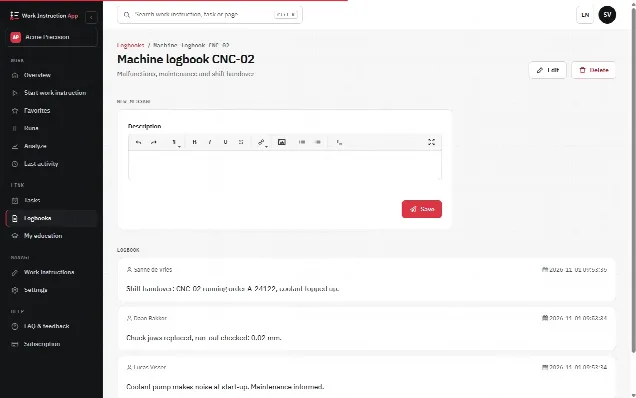
Existing PDFs or images, such as an old manual page or a drawing, can be converted into a new work instruction in which every file becomes a page. Drafts are saved automatically, and Publish creates a new version (v1, v2 and so on) while older versions stay traceable. Operators start the instruction from the overview or by scanning a QR code at the machine, and every run records who did it, when, with which version and every answer and photo.
For the training side, courses can be linked to work instructions, completing a course work instruction issues a certificate, and the skills matrix shows who has completed which courses. See knowledge management for how these parts fit together.
Where should you start?
Start with one name and one task. Pick the person whose departure worries you most, fill in the prioritisation table with them and their team leader, and capture the highest-scoring task in the next two weeks. Test it with a colleague, publish it, and repeat. A handful of well-tested instructions for the critical tasks is worth more than a large knowledge project that is still being planned when the expert leaves.